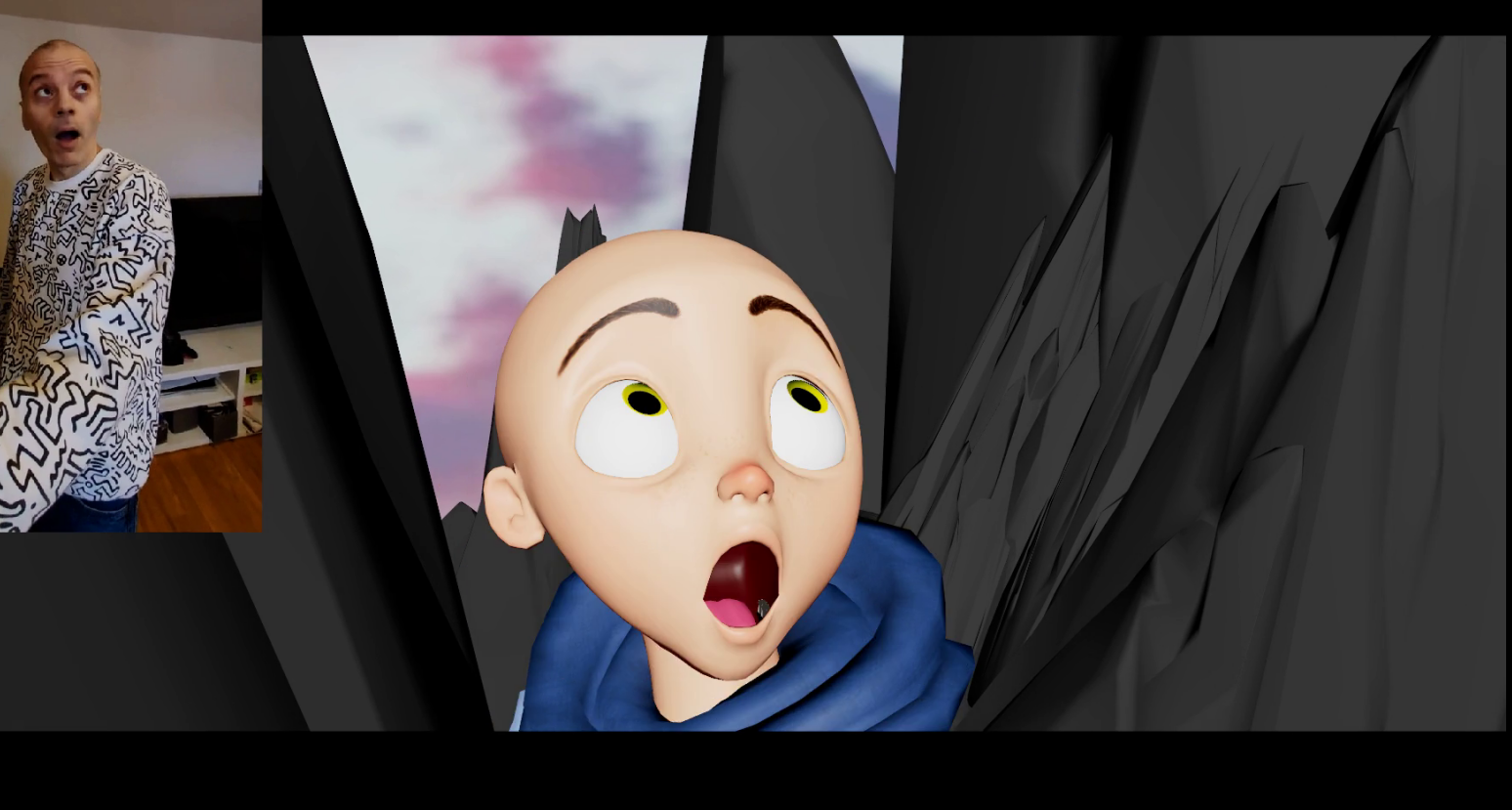
Why Reference Matters More Than You Think
Students underestimate reference constantly. Professional animators do not. At major studios, it is not unusual for an animator to spend an entire working day finding or recording the right reference before touching a single curve.
When you record reference you are entering the character. You are understanding the action from the inside. You are answering questions that no amount of staring at a rig will answer, how long does this actually take? Where does the weight shift first? What does the body do before the obvious movement begins?
Animators Are Actors With a Mouse
This is not a metaphor. It is a description of the job.
When you animate a human or humanoid character, you are performing that character. Their habits, their physical logic, their emotional state, all of it lives in how they move, and you need to know that movement from the inside before you can translate it into curves and poses.
At major studios, internship programmes sometimes include acting training because a better actor makes a better animator. The ability to inhabit a character physically, to feel where the weight goes, where the energy comes from, where the hesitation lives, directly improves the quality of the animation that follows.
Creature and Non-Human Reference
When you are working on a creature, the process shifts. You cannot step into the skin of a dragon or an alien the way you can step into a human character. But you can study the real world deeply enough to understand the principles underneath.
Watch animals move. Understand how quadrupeds transfer weight in a walk versus a run. Understand how birds generate lift. Understand how cats land. The more you observe real movement, the more your creature animation will feel grounded even when the creature itself is entirely fictional.
Keep a second monitor with reference footage open while you animate. Compare your poses directly against what you are seeing. Animation has more in common with drawing from life than most people realise, it requires the same quality of observation, and the same discipline of looking before committing.
Where to Find Reference
When you cannot record your own, the internet is your library.
YouTube is the most immediate resource, search for the action you need and you will almost always find something useful.
Stock footage platforms like Adobe Stock have high quality material, often shot specifically for professional use, with clean backgrounds and good lighting that makes movement easier to read.
For creatures and animals, nature documentaries are invaluable. BBC Earth, National Geographic, and similar sources have footage of animals moving in ways that no studio production could replicate.
Start Before the Shot Starts
This is one of the most common mistakes in student work, and one of the easiest to fix.
Do not wait for the action to begin before you start performing. Enter the character a few moments before your shot starts. Carry the energy of what came before. If your character is exhausted, be exhausted before the first frame. If they are excited, let that exist in your body before the camera starts rolling.
The result is that your animation will never start from a pose that feels neutral and disconnected. It will start mid-life, which is where real movement always lives.
Lipsync and Audio Reference
If your shot involves dialogue, the reference process changes slightly. Rather than recording your own audio separately, work with the actual audio track that will be used in the shot, play it on loop and record yourself performing to it repeatedly.
Your recorded audio is not the deliverable. The original track is. What you are capturing is your physical and facial performance in sync with the real timing of the words. This gives you the most accurate reference possible for both the lipsync and the body performance that surrounds it.
Explore, Then Commit
Record multiple takes. Try different choices. Let yourself be wrong a few times, that is how you find what is right. A performance that surprises you on the third take is almost always better than a performance you planned in advance and repeated until it was technically clean.
That said, the goal is to arrive at a reference you can actually use. Ideally, one continuous take that covers the full shot from before the action begins to after it ends. The fewer edits in your reference, the fewer problems you will have translating it into animation.
If you need to cut two takes together, because the first had a perfect opening and the second had a perfect ending, that is fine. Just be aware that there will be a gap between the two recordings unless you were careful to maintain the same body position at the edit point.
Reference Tells You How Long Things Take
This is one of the most underestimated functions of reference, and one of the most immediately practical.
Before you record, you probably have an idea of what your shot will contain. Three beats of action, a reaction, a turn. It sounds achievable. Then you record it, and you discover that those three beats take eight seconds, and your shot is four seconds long.
Reference forces you to simplify your ideas to what can actually be communicated clearly in the time available, and that simplicity almost always makes the animation stronger.
Have Fun. It Does Not Need to Be Perfect.
The best reference is recorded by someone who is present and uninhibited, not someone who is technically correct and slightly embarrassed.
Give yourself permission to be bad at it. Give yourself permission to laugh at yourself between takes. The looseness that comes from not taking it too seriously is exactly the quality that makes reference useful, real movement, real impulse, real timing.